
April 2023


Nonprofit organizations are a crucial part of society, dedicating themselves to a wide range of social and environmental causes. From supporting education and healthcare to alleviating poverty and promoting human rights, nonprofits strive to create a positive impact on the world.
The primary purpose of nonprofit organizations is to provide assistance and support to individuals, and communities in need, and work for public benefit. They are typically established to address specific social issues, such as poverty, homelessness, hunger, education, health, human rights, environmental conservation, and animal welfare, among others. These organizations work towards creating a positive impact on society and bringing about social change.
However, there are some common purposes that many nonprofit organizations share. These include:
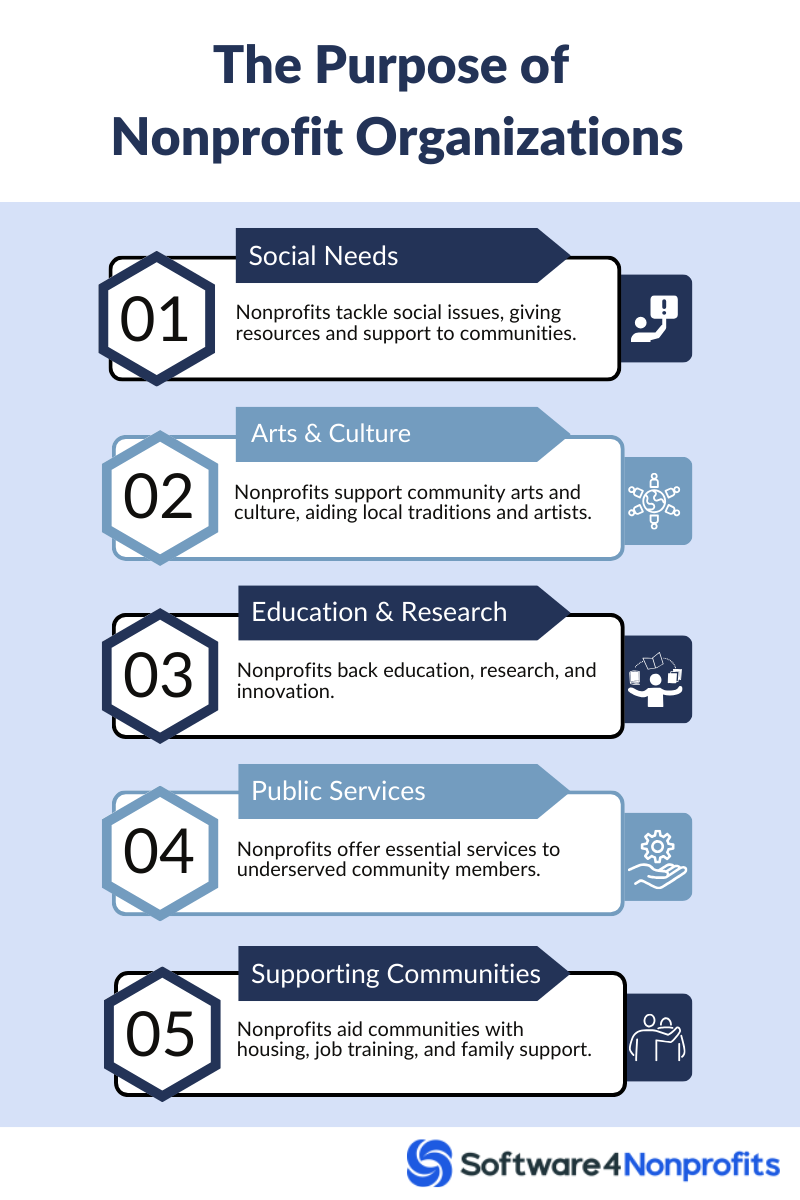
Many nonprofit organizations are focused on addressing specific social issues such as poverty, homelessness, healthcare, education, human rights, and the environment. These organizations work to provide support, resources, and services to help individuals and communities overcome these challenges.
Nonprofits may also focus on promoting the arts, culture, and heritage of a community. These organizations work to preserve and promote local art and cultural traditions, support artists, and provide opportunities for community members to engage with the arts.
Nonprofits may also work to advance education and research in various fields such as science, technology, engineering, mathematics (STEM), social sciences, and humanities. These organizations provide resources, training, and support for students, educators, and researchers to advance knowledge and innovation.
Some nonprofit organizations provide public services such as health clinics, libraries, museums, parks, and community centers. These organizations work to provide access to essential services and resources to members of the community who may not have access to these resources otherwise.
Nonprofits may also work to support and empower communities by providing resources and services that help to build strong and resilient communities. These organizations may focus on building affordable housing, providing job training, or offering support to families and individuals in need.
These organizations rely on donations and grants from individuals, foundations, and corporations to fund their operations and programs. By working together with the government and different foundations, nonprofits can make a significant impact on the world and create positive change in the communities they serve.
Charitable foundations need to make money to sustain their operations, continue their programs, and support their staff. While nonprofits have different missions, they all require funding to achieve their goals.
Some of the reasons why nonprofits need to make money include:
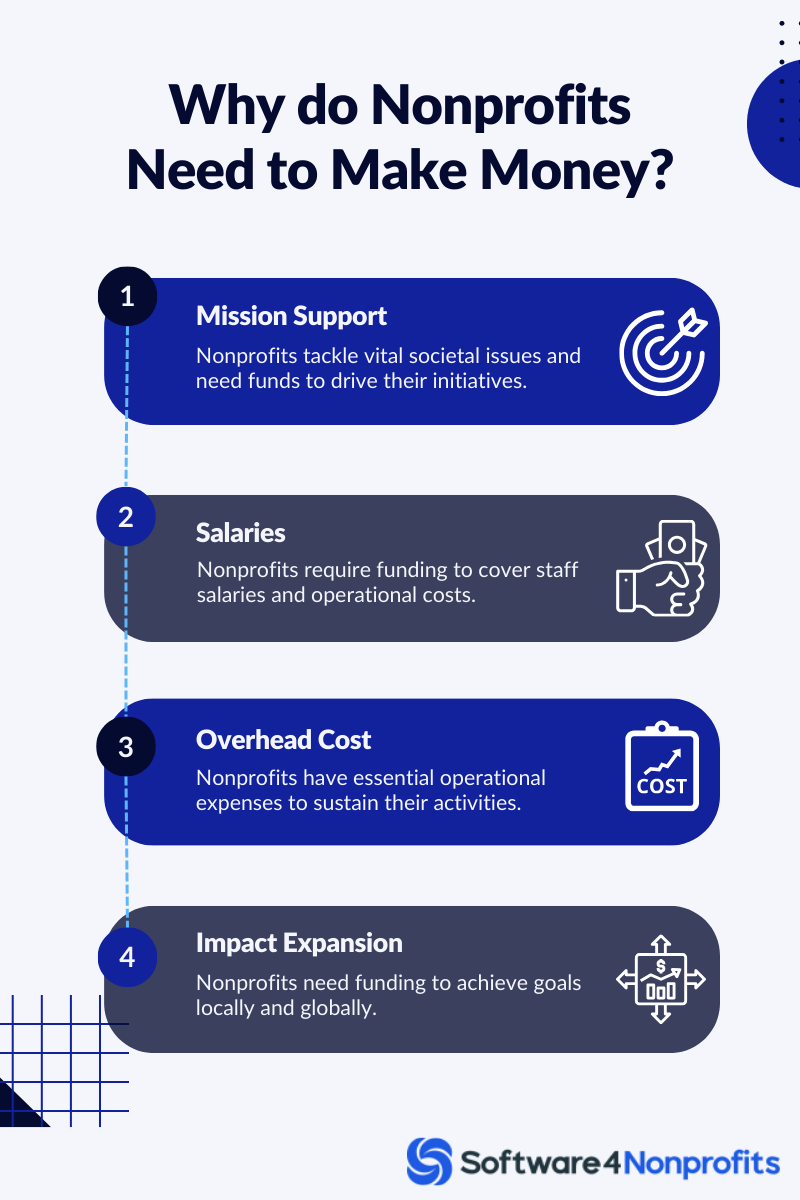
Nonprofits are dedicated to addressing social, environmental, and cultural needs and work for other public benefits that are often neglected by the private and public sectors. To achieve their mission, nonprofits need to have the financial resources to support their programs and activities.
A nonprofit corporation relies on its staff to achieve its goals. To attract and retain talented workers, nonprofits need to offer their team members reasonable compensation and benefits, which require funding.
Nonprofits have overhead costs and other indirect costs such as rent, utilities, supplies, and other administrative costs, which need to be covered to keep their operations running.
Nonprofits often have ambitious goals to make a significant impact on society. To achieve these goals, they need to have the resources to expand their programs and services, which requires funding.
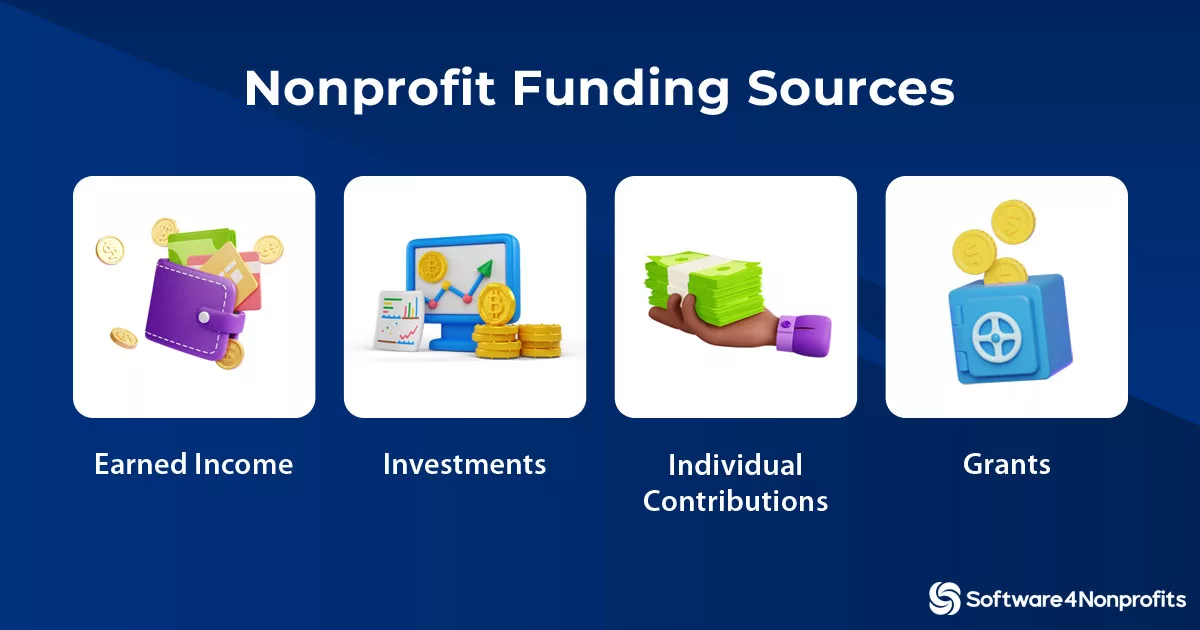
Like any other organization, non-profits require funding to sustain their operations and achieve their goals. Sources of income for non-profits can vary depending on the type of organization and its mission. Let’s look at some of the sources of income for nonprofit organizations.
Nonprofits can actually generate revenue by offering goods or services that align with their mission – these are called earned income ventures. Let’s take a closer look at earned income for nonprofits:
Nonprofits can charge fees for services they provide that directly align with their mission statement. For example, a nonprofit that provides education or healthcare services may charge fees for those services.
Nonprofits can sell products related to their mission, such as clothing, artwork, or books. Sales of merchandise can generate revenue and raise awareness for the nonprofit’s mission.
Nonprofits can license their brand or intellectual property to generate revenue. For example, a nonprofit that produces educational videos may license its content to other organizations or individuals for a fee.
Nonprofits can provide services to other organizations or government agencies under contract. For example, a nonprofit that provides environmental services may be hired by a city to conduct a study on local water quality.
Nonprofits can provide consulting services to other organizations or individuals. For example, a nonprofit that specializes in leadership development may provide consulting services to a for-profit company.
Nonprofits can rent out their property or space to generate income. For example, a nonprofit that owns a building may rent out office space to other organizations or individuals.
Silent auctions are a fundraising technique commonly used by non-profit organizations, schools, and other groups to generate donations from attendees. During a silent auction, items or experiences are displayed with a bidding sheet next to each item. Participants can then write down their bid on the sheet, with the highest bidder winning the item at the end of the auction.
Earned income can be a valuable source of revenue for a not-for-profit organization, especially those that provide goods or services that align with its mission. By diversifying their revenue streams, nonprofits can achieve financial sustainability and continue to serve their communities effectively.
Investments can be a source of revenue for some nonprofit organizations, though they are generally not as significant as other sources like donations and grants. Nonprofits may invest in stocks, bonds, or other securities to generate income or to build their financial reserves. Here are additional details on investment income for nonprofits:
Some nonprofits may establish an endowment, which is a fund that is invested to generate income for the organization’s operations or programs. Endowments are typically built through donations and may have specific restrictions on how the income can be used.
Nonprofits may also establish reserve funds, which are funds that are set aside to support the organization in case of emergencies or unexpected expenses. Reserve funds may be invested to generate income for the organization.
Nonprofits that invest their funds must establish investment policies that outline their investment goals, risk tolerance, and other factors that guide their investment decisions. Investment policies must comply with legal and ethical standards and must be approved by the nonprofit’s governing board.
Nonprofits and their board of directors who invest their funds must comply with legal and ethical standards, including regulations related to conflict of interest and prudent investment practices. Nonprofits may hire investment advisors or rely on their board members to provide expertise in making investment decisions.
Investments can be a source of revenue for nonprofits, but they require significant expertise and resources to manage effectively. Nonprofits must establish clear investment policies and comply with legal and ethical standards to ensure that their investments align with their mission and priorities. By effectively managing their investments, nonprofits can generate income to support their operations and programs and build their financial sustainability.
Individual contributions are a critical source of revenue for charitable organizations. These contributions come from individuals who believe in the mission and work of the nonprofit and want to support its efforts. Here are some details on individual contributions for nonprofits:
Grants are a significant source of revenue for many charitable nonprofits. These are funds that are given by foundations, corporations, or government agencies to support specific projects or programs that align with the funder’s priorities. Here are some details on grants for nonprofits:
Corporate foundation grants are a form of financial assistance that non-profit organizations can seek from foundations established by corporations. Such foundations generally fund projects and programs that are in line with the corporate values and interests of the company. To apply for corporate foundation grants, non-profits should carefully review the eligibility criteria and guidelines of each foundation, and customize their applications to highlight how their organization aligns with the foundation’s priorities.
Corporate giving programs are another way for non-profit organizations to receive financial support. These programs are established by corporations to provide charitable donations to non-profit organizations that align with their corporate social responsibility goals. Corporate giving programs can take many forms, such as cash donations, sponsorships, in-kind donations, and employee-matching gifts.
Family foundation grants are another type of funding that non-profit organizations can apply for. These grants are offered by private foundations established by families or individuals. Family foundations can support a wide range of causes, such as education, health, and the arts. Building relationships with family foundations can also be helpful in securing future funding.
Community foundation grants offer financial assistance that non-profit organizations can apply for, provided by foundations that are established to support local causes and initiatives within a specific geographic area. By receiving funding through community foundation grants, non-profits can promote their mission and make a positive impact on the local community.
Non-profit organizations can also seek financial support through federal government grants. These grants are provided by various government agencies and can fund programs and projects that align with the government’s priorities, such as healthcare, education, and community development.
Local government grants are a potential funding source for non-profit organizations. These grants are typically offered by local government agencies, such as city councils or county governments, to support community-based initiatives and programs. Non-profits can apply for local government grants to fund projects that align with the government’s priorities, such as community development, social services, and environmental initiatives.
Nonprofits that receive grants must comply with the terms of the grant agreement and report on their progress and outcomes. This may require specialized staff or software to track and report on the use of grant funds.
Here’s a short video explaining the 6 different types of grants for nonprofits.
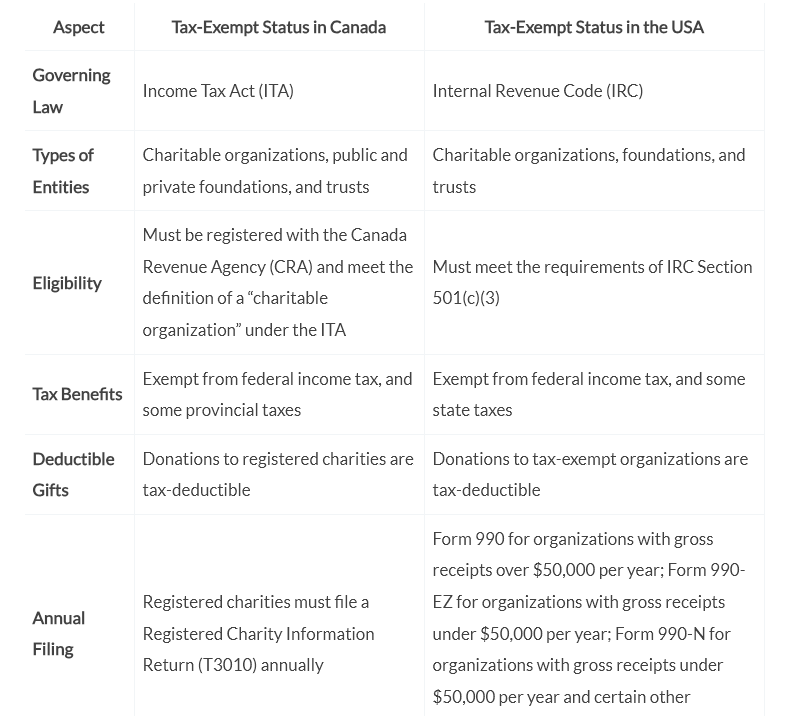
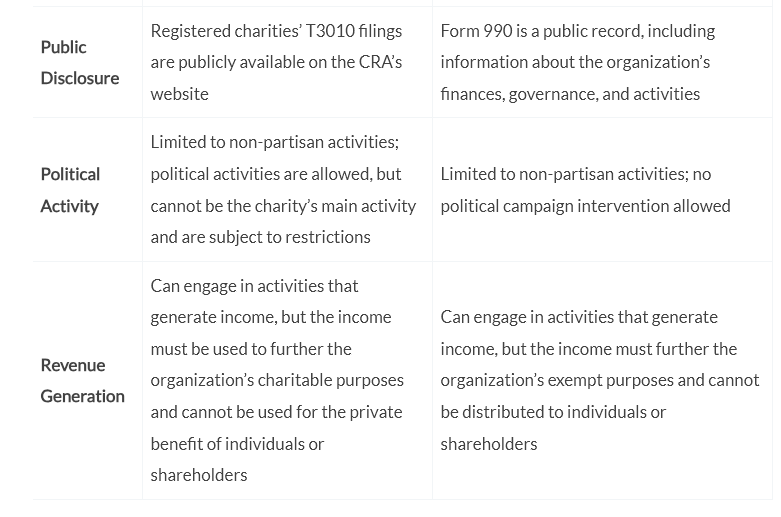
Tax-exempt status is a legal designation that can be granted to certain types of non-profit organizations in both Canada and the United States. However, the specific requirements and processes for obtaining tax-exempt status can vary between the two countries.
In Canada, non-profit organizations that meet certain criteria can apply for tax-exempt status as registered charities. To qualify, the organization must have a charitable purpose that falls within one of the categories outlined in Canadian tax law, such as relieving poverty, advancing education, or promoting religion.
Additionally, the organization must demonstrate that it operates exclusively for charitable purposes, with no private benefit to nonprofit founders or groups. Once granted, registered charities are exempt from paying income tax and can issue tax receipts to donors for eligible donations.
In the United States, non-profit organizations can apply for tax-exempt status as 501(c)(3) organizations. To qualify, the organization must be organized and operated exclusively for charitable, educational, religious, or scientific purposes. Unlike in Canada, however, there is no requirement that the organization is registered with the government to receive tax-exempt status.
Instead, organizations can self-declare their tax-exempt status by submitting an application to the IRS and meeting certain requirements, such as filing annual information returns and adhering to restrictions on political lobbying and advocacy. Once granted, 501(c)(3) organizations are exempt from paying federal income tax and can receive tax-deductible donations from individuals and corporations.
In conclusion, non-profits can make money by adopting a variety of strategies, including grant writing, fundraising events, corporate partnerships, and online donations. It’s essential to identify and prioritize funding sources based on the organization’s goals and target audience.
However, the success of any revenue-generating method depends on the non-profit’s ability to communicate its mission effectively and establish a strong relationship with its supporters. By implementing these strategies and maintaining a dedicated focus on its mission. Also, a non-profit can generate the necessary resources to achieve its goals and create a lasting impact on society.
Block Quote