
April 2023


Starting a nonprofit organization can be a fulfilling experience that allows you to channel your passion into creating a positive impact in your community. However, it’s essential to have a clear understanding of the process and requirements involved in starting a nonprofit organization. This comprehensive guide will take you through the step-by-step process of how to start a nonprofit organization.
So, if you’re ready to make a positive impact, let’s dive in and learn how to start a nonprofit organization!
The first step in starting a nonprofit organization is to form a nonprofit corporation.
A nonprofit corporation is a legal entity that is separate from its founders and board of directors. This legal structure offers several benefits, including limited liability for the organization’s members and the ability to solicit tax-deductible donations.
To form a nonprofit corporation, individuals must first choose a name for their organization. The name should be unique and not already in use by another organization. Once a name has been selected, articles of incorporation must be drafted.
Articles of incorporation are legal documents that establish the nonprofit corporation and its purpose.
The articles of incorporation should include:
Once the articles of incorporation have been drafted, they must be filed with the state government. Filing fees and requirements vary by state, so it is important to research the specific requirements for the state where the organization will be based.
Thanks to @Grant Writing and Funding for this amazing video!
The bylaws are the rules and regulations that govern the day-to-day operations of the organization. Bylaws typically include provisions on membership, meetings, elections, and other governance issues. Bylaws are not filed with the state, but they are an important document for guiding the organization’s activities and ensuring compliance with legal and regulatory requirements.
Nonprofit organizations may need to obtain certain permits and licenses to operate legally. This can include permits for fundraising, licenses for certain types of activities or services, and registrations with state and federal regulatory agencies. Nonprofit organizations should research the requirements for their specific activities and location to ensure they are in compliance with all applicable laws and regulations.
In the United States, there are several service providers that can help you legally start a nonprofit organization. Some of these companies offer a range of services, including consultation, document preparation, and filing assistance. Here are a few reputable companies to consider:
LegalZoom is a well-known provider of legal services. They offer a comprehensive nonprofit formation package, which includes filing for 501(c)(3) tax-exempt status with the IRS.
What sets them apart is their strong focus on providing access to legal advice and support from a network of attorneys. Nonprofit organizations can benefit from their expertise and guidance in navigating the complexities of forming a nonprofit and obtaining tax-exempt status.
Incfile is known for its competitive pricing and free registered agent service for the first year. Their nonprofit formation package includes preparing and filing Articles of Incorporation, obtaining an EIN, and creating customized bylaws and organizational minutes.
With Incfile, forming a nonprofit organization is easy and affordable. They offer a range of services to help organizations start off on the right foot. These services also include expert guidance and support throughout the process.
Northwest Registered Agent is committed to customer privacy and uniquely offers a free registered agent service for the first year while maintaining a policy of not selling client information to third parties. Their nonprofit formation package includes state and federal filings, customized bylaws, and ongoing support.
Swyft Filings excels in providing fast and efficient services to help establish your nonprofit organization quickly. Their standout offering is personalized customer support, which includes a dedicated account manager to assist with the process, customized documents, and a 100% satisfaction guarantee.
Harbor Compliance is a specialist in nonprofit compliance and provides personalized support throughout the formation process. Their distinguishing feature is their extensive compliance expertise, ensuring that your organization is set up correctly and adheres to all legal requirements. Their nonprofit package includes state and federal filings, registered agent service, and ongoing compliance assistance.
While these companies can help you form a nonprofit organization, it is essential to conduct thorough research and consult with legal and financial professionals to ensure that your organization meets all legal and compliance requirements.
When considering how to start a nonprofit organization, it’s important to understand the role of the board of directors. This group is responsible for overseeing the operations and management of the nonprofit organization. Board members should be committed to the organization’s mission and possess skills and expertise relevant to its needs.
To establish a board of directors, the organization’s founders should identify potential candidates and evaluate their skills and expertise. It’s essential to ensure diversity among board members, including a range of backgrounds, experiences, and perspectives. Additionally, the board should comprise individuals with legal, financial, and fundraising expertise.
Once the board of directors is appointed, holding regular meetings is crucial to oversee the organization’s operations and ensure that it is achieving its goals and objectives. Board members are also accountable for establishing policies and making strategic decisions about the organization’s future. By following these steps on how to start a nonprofit organization, you can establish a strong and effective board of directors to guide your organization toward success.
A mission statement is a critical component of a nonprofit organization, as it outlines the organization’s purpose and goals. A well-written mission statement should include the organization’s values, target audience, and goals. The mission statement should be concise and easily understood by stakeholders, including donors, volunteers, and the general public.
To create a mission statement, the organization’s founders should identify the organization’s purpose and goals. Regularly review and update the mission statement to ensure that it remains relevant to the organization’s needs and goals.
Here are a few mission statements from top nonprofit organizations:
When looking to start a nonprofit organization, it’s important to obtain federal tax-exempt status to receive tax-deductible donations and avoid paying federal income taxes. This status is achieved by filing Form 1023 with the Internal Revenue Service (IRS).
Before filing, determine which form your organization should use. Most organizations will file Form 1023, but smaller nonprofits with annual gross receipts under $50,000 and assets less than $250,000 may be eligible to file the simpler Form 1023-EZ. Check the IRS website for the most up-to-date eligibility requirements.
Both forms require detailed information about your organization’s purpose, structure, financial data, governance, operations, and planned activities. You will need to provide:
Fill out Form 1023 or 1023-EZ with the gathered information, providing accurate and complete responses. Prepare to answer questions about your organization’s governance, fundraising practices, lobbying activities, and more.
Some organizations may need to submit additional documentation with their application, such as financial statements, organizing documents, or written explanations of specific activities. Review the form instructions to determine what supporting materials, if any, are required for your organization.
Remember that the process for obtaining tax-exempt status may vary slightly depending on your state, so it’s essential to consult with a legal or financial professional familiar with nonprofit law in your jurisdiction.
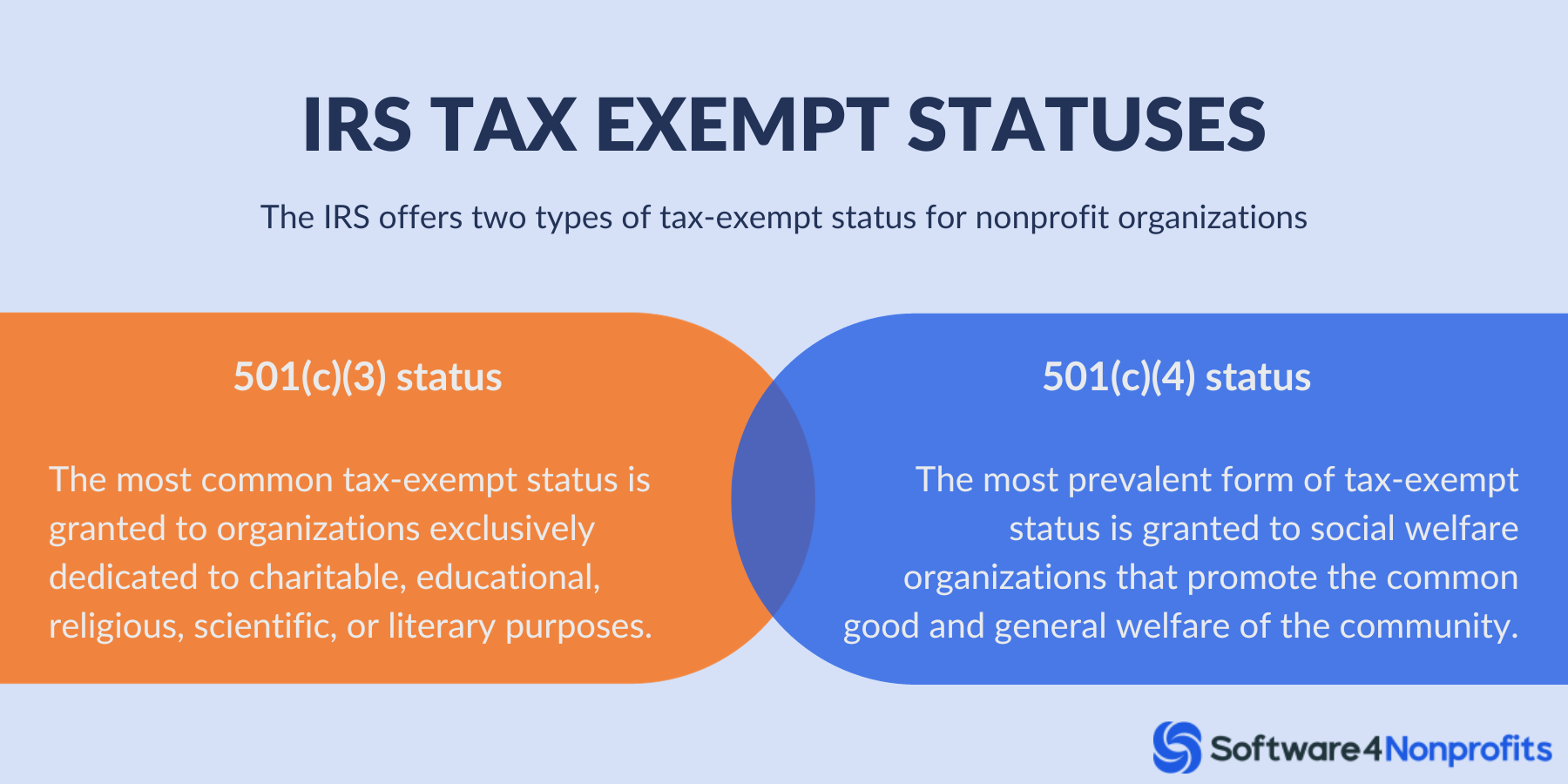
The IRS offers two types of tax-exempt status for nonprofit organizations:
501(c)(3) status is the most common type of tax-exempt status and is granted to organizations that are organized and operated exclusively for charitable, educational, religious, scientific, or literary purposes.
501(c)(4) status is granted to social welfare organizations that promote the common good and general welfare of the community.
Once the organization has obtained tax-exempt status, it will receive a determination letter from the IRS confirming its tax-exempt status. The determination letter should be kept on file and provided to donors and other stakeholders as needed.
One of the main benefits of being a tax-exempt organization is that it is exempt from paying federal income tax on its earnings. This can significantly reduce the organization’s operating expenses and allow it to allocate more resources towards its mission and programs. Tax-exempt organizations may also be eligible for certain tax deductions and exemptions, as well as access to grants and other funding opportunities.
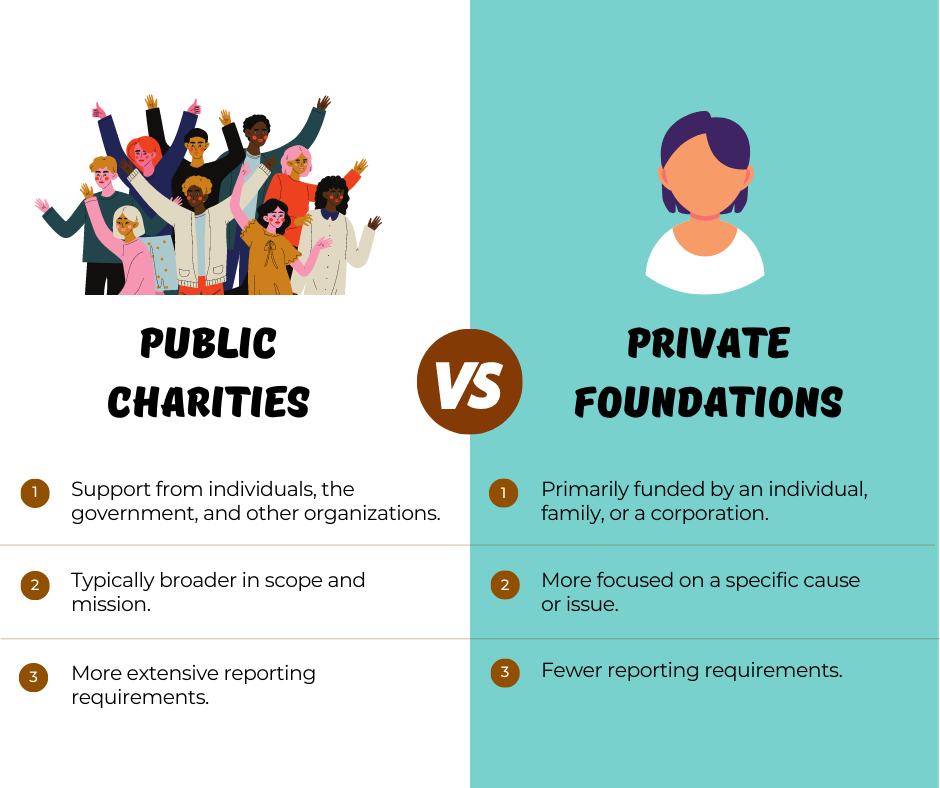
There are two main categories of types of nonprofit organizations: public charities and private foundations.
Public charities are organizations that receive a substantial portion of their funding from the general public and are operated for the benefit of the community. They must meet certain requirements to maintain their tax-exempt status, including limits on the amount of support they can receive from a single source and restrictions on lobbying and political activities.
Examples of public charities include religious organizations, educational institutions, and organizations that provide social services to underserved populations.
Private foundations, on the other hand, are organizations that are typically funded by a single individual, family, or corporation. They typically focus their activities on supporting specific causes or organizations. Private foundations are subject to more stringent rules and regulations than public charities, including limits on self-dealing, minimum distribution requirements, and excise taxes on certain investments and activities.
Examples of private foundations include family foundations, corporate foundations, and grant-making organizations.
An Employer Identification Number (EIN) is a unique nine-digit number assigned by the Internal Revenue Service (IRS) to identify a business entity for tax purposes. Federal Tax Identification Numbers is another name for EINs.
Nonprofit organizations are required to obtain an EIN for various purposes, including opening a bank account, filing tax returns, and applying for tax-exempt status. An EIN is also required if the organization plans to hire employees or engage in certain types of business transactions.
When learning how to start a nonprofit organization, obtaining an Employer Identification Number (EIN) is a crucial step. An EIN is necessary for conducting business, fulfilling tax obligations, opening a bank account, hiring employees, and applying for tax-exempt status.
To obtain an EIN, nonprofit organizations must complete and submit Form SS-4 to the IRS. The application can be submitted online, by mail, or by fax. Once the application is processed, organizations can receive their EIN by mail or by phone within a few weeks.
Nonprofit founders should ensure they obtain an EIN as early as possible to avoid delays in the organization’s operations. By obtaining an EIN, you can establish a strong foundation for your organization and achieve its mission and goals.
Shoutout to @Shalita “The Nonprofitista” O’Neale for this amazing video!
The National Council of Nonprofits is a membership organization that provides resources, advocacy, and networking opportunities to nonprofit organizations. Becoming a member of the National Council of Nonprofits can provide valuable benefits to nonprofit organizations. As they can get access to training programs and a network of other nonprofit leaders and professionals.
To become a member of the National Council of Nonprofits, nonprofit organizations must complete the following steps:
Once a nonprofit organization is approved for membership in the National Council of Nonprofits, it can begin to take advantage of the benefits of membership. However, the organizations should ensure that they stay up-to-date with their membership dues to maintain their membership in good standing.

Starting a nonprofit organization can be a rewarding experience that allows you to make a positive impact in your community. However, it requires careful planning and attention to detail. By following the mentioned steps and guidelines on how to start a nonprofit organization, you can establish a well-structured and financially sound organization that focuses on achieving its mission and goals.
Block Quote


The strategic planning process is a structured approach to determine the best direction for an organization. It involves detailed planning, adaptability, and a thorough understanding of the current...